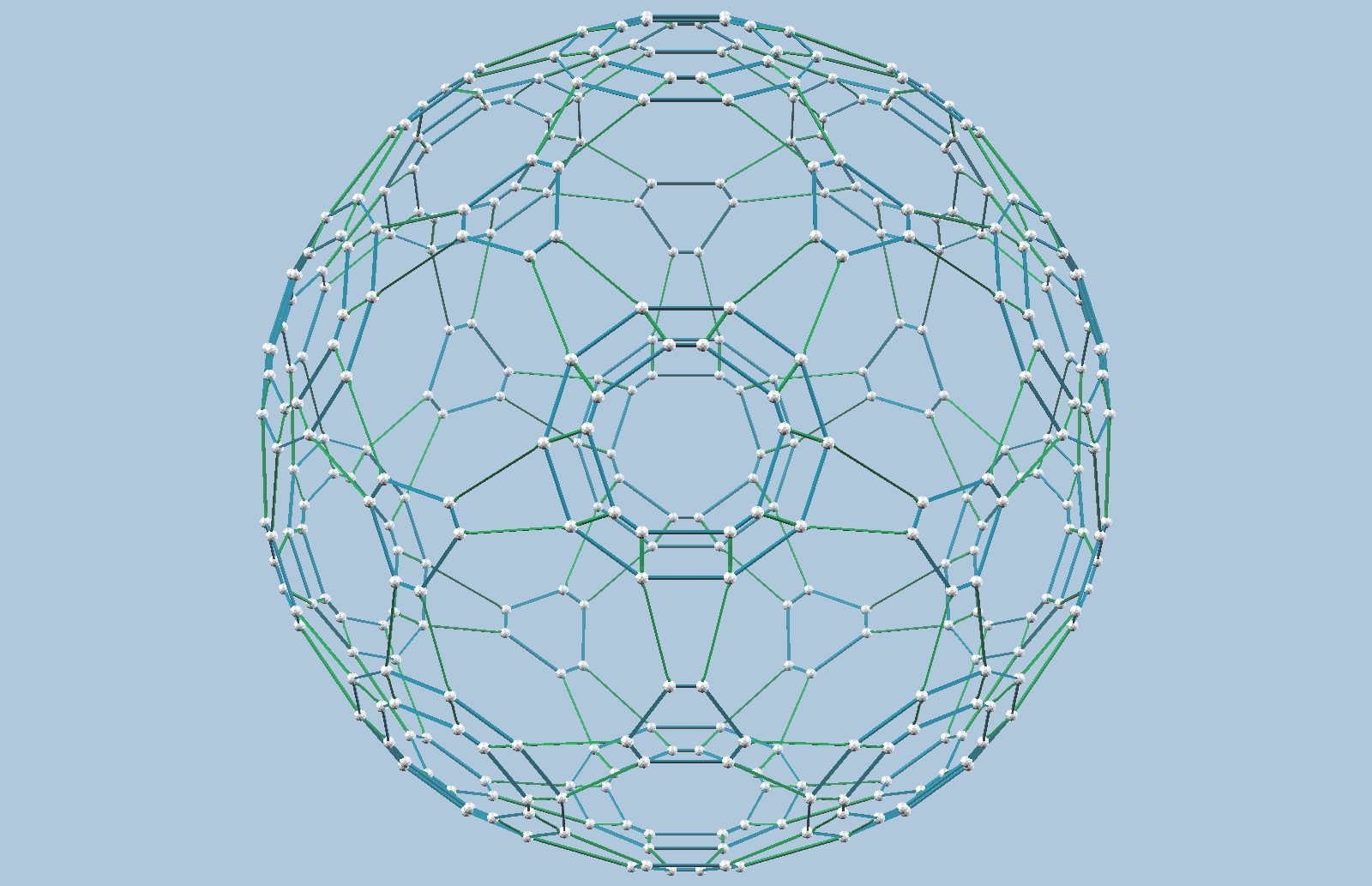
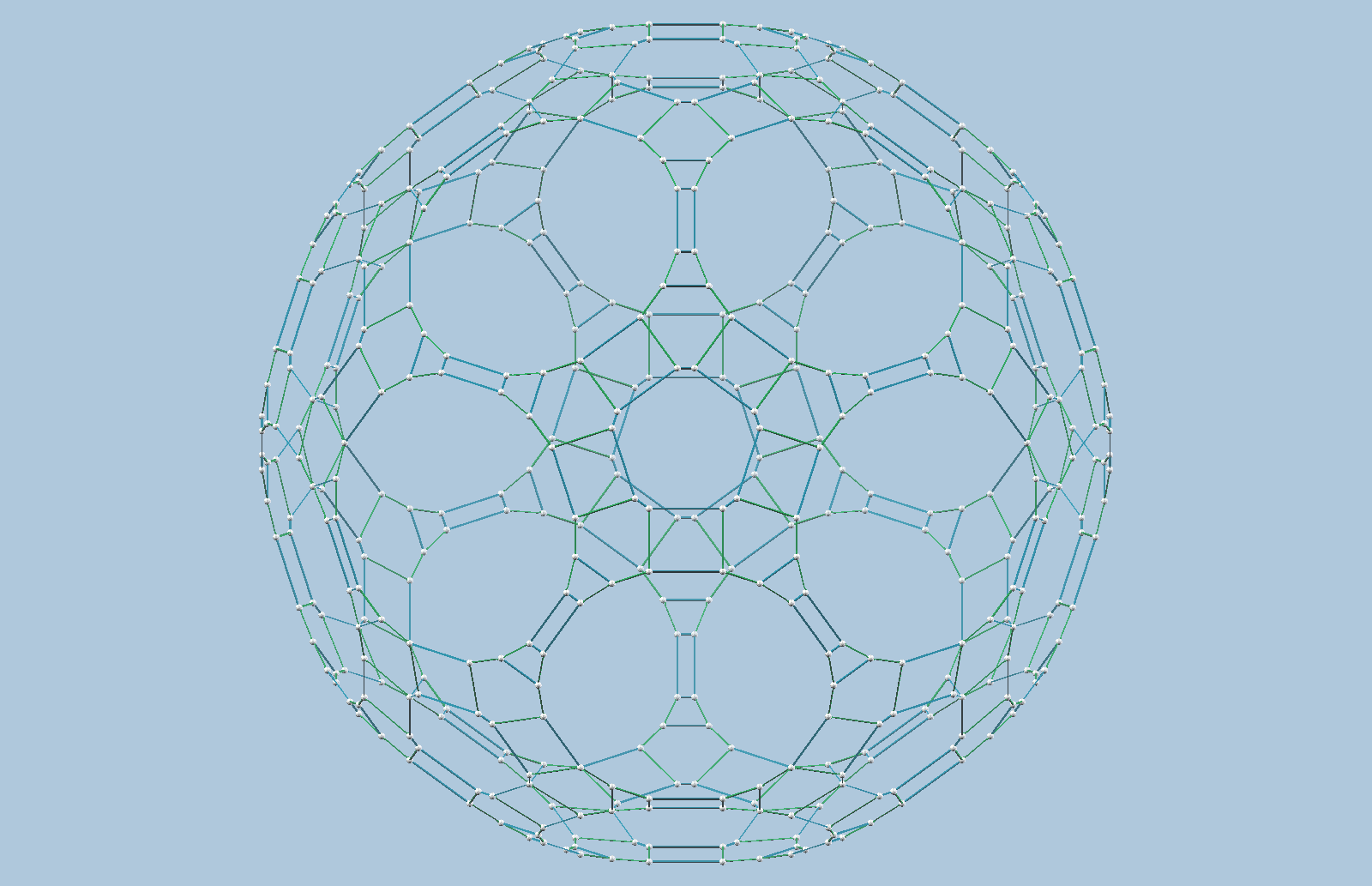
Every model here is perfectly round: all of its balls sit at exactly the
same distance from the centre — equal in exact arithmetic, not merely
to within a tolerance — so they lie on a common sphere. Every edge of
the convex hull is a single standard strut. Drag to rotate any model.
For shells that are very round but not exactly so, see
Approximate Zome Spheres.
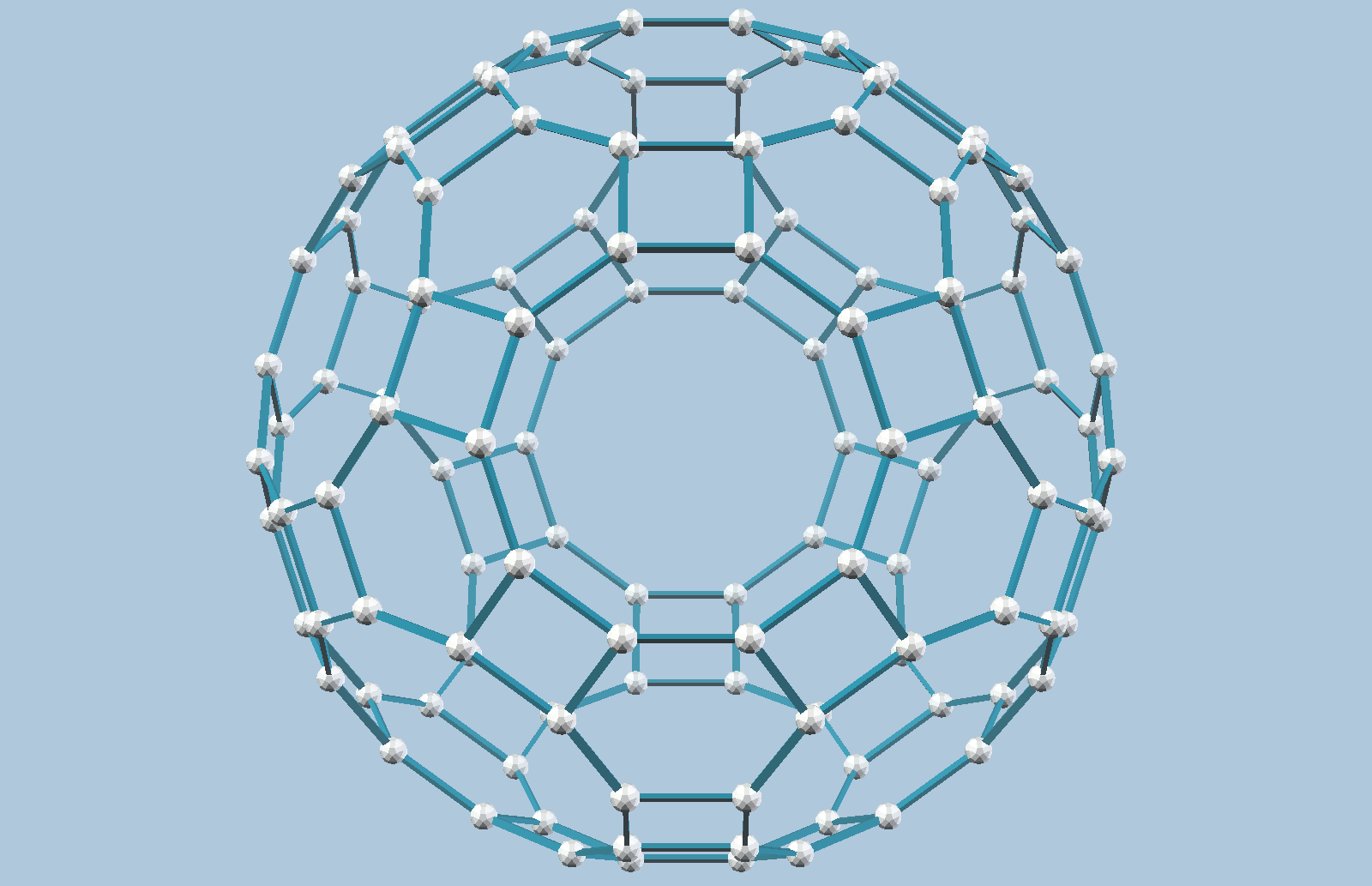
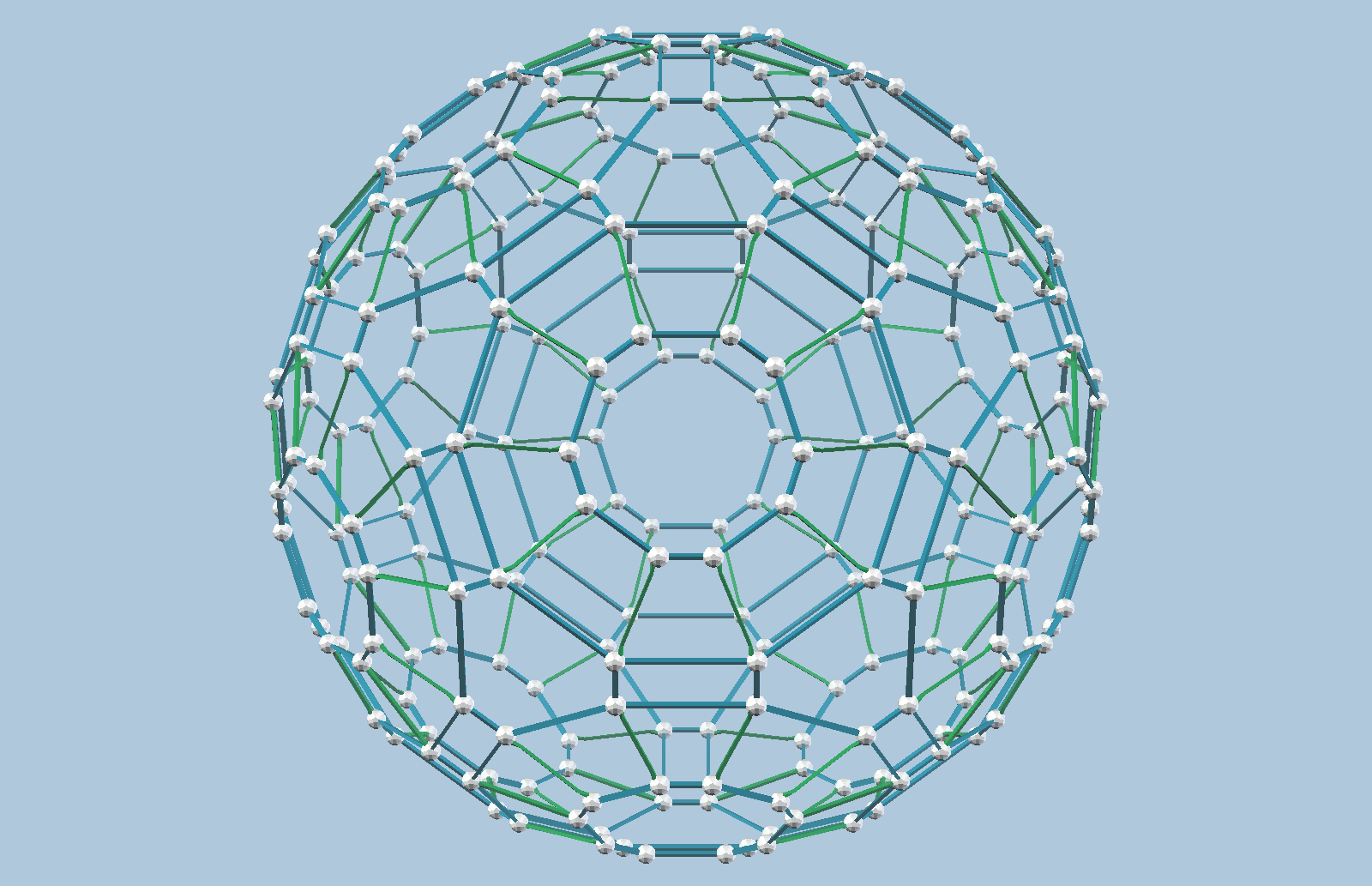
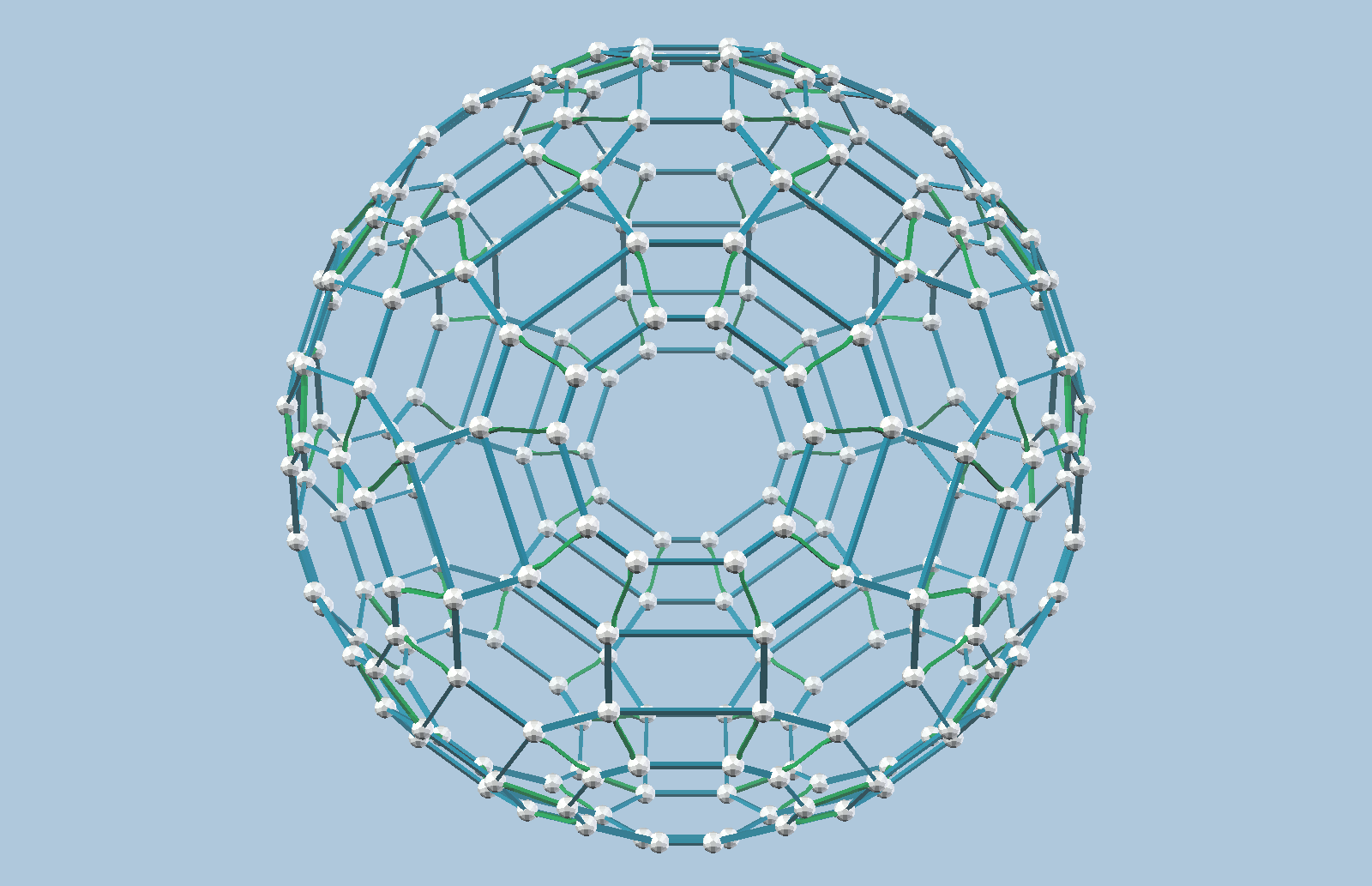
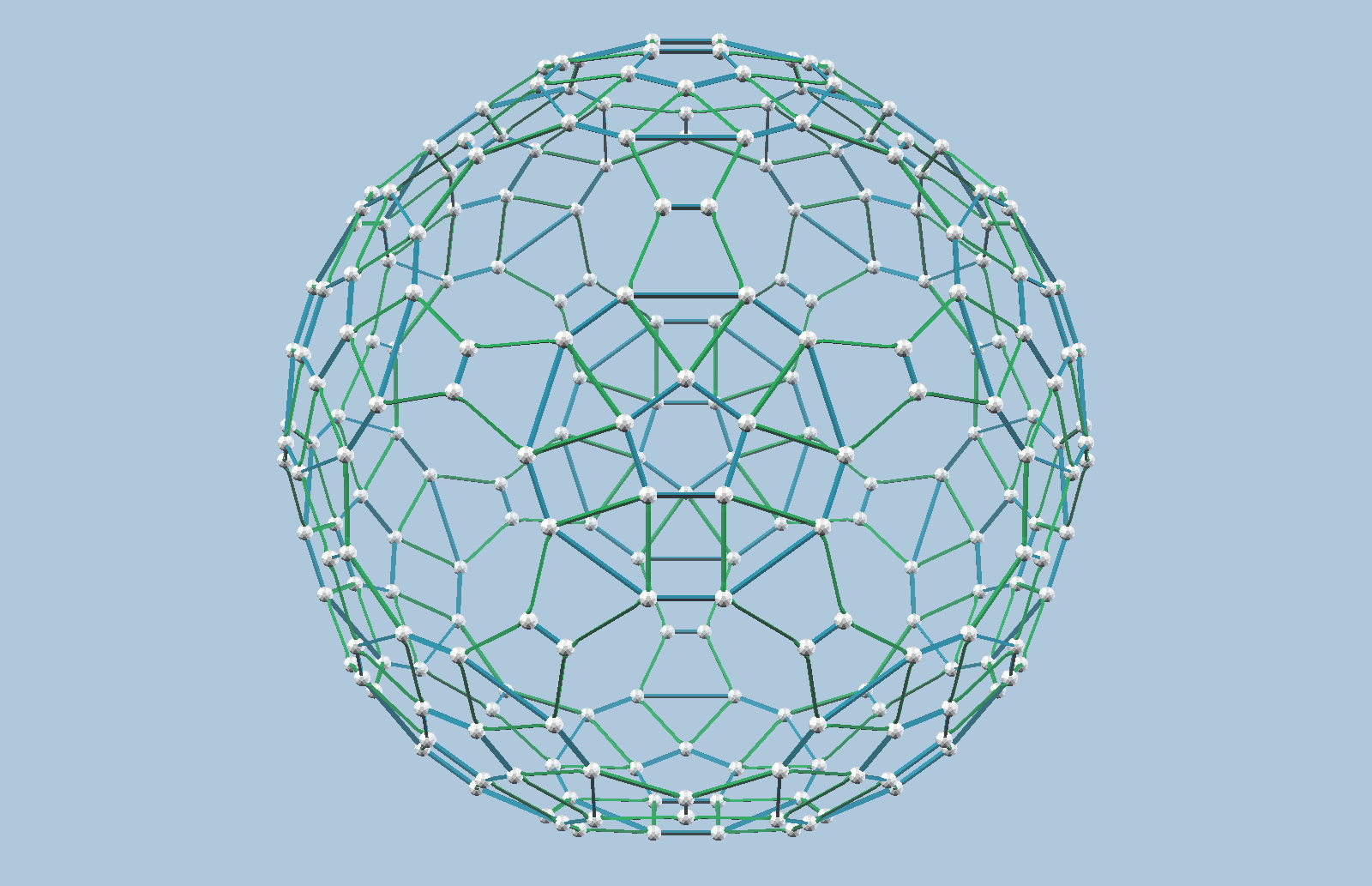
Truncated icosidodecahedron — 120 balls 180 strutsAn Archimedean solid. All 120 balls lie in one orbit, so a common radius comes free from the symmetry.240 balls (variant a) 420 strutsTwo orbits at a common radius.240 balls (variant b) 420 strutsTwo orbits at a common radius.240 balls (variant c) 450 strutsThree orbits at a common radius.360 balls 600 strutsThree orbits. Most balls with full icosahedral symmetry, struts of length 0-2.480 balls 720 strutsFour orbits. Most balls with full icosahedral symmetry, struts of length 0-3.
Physical construction
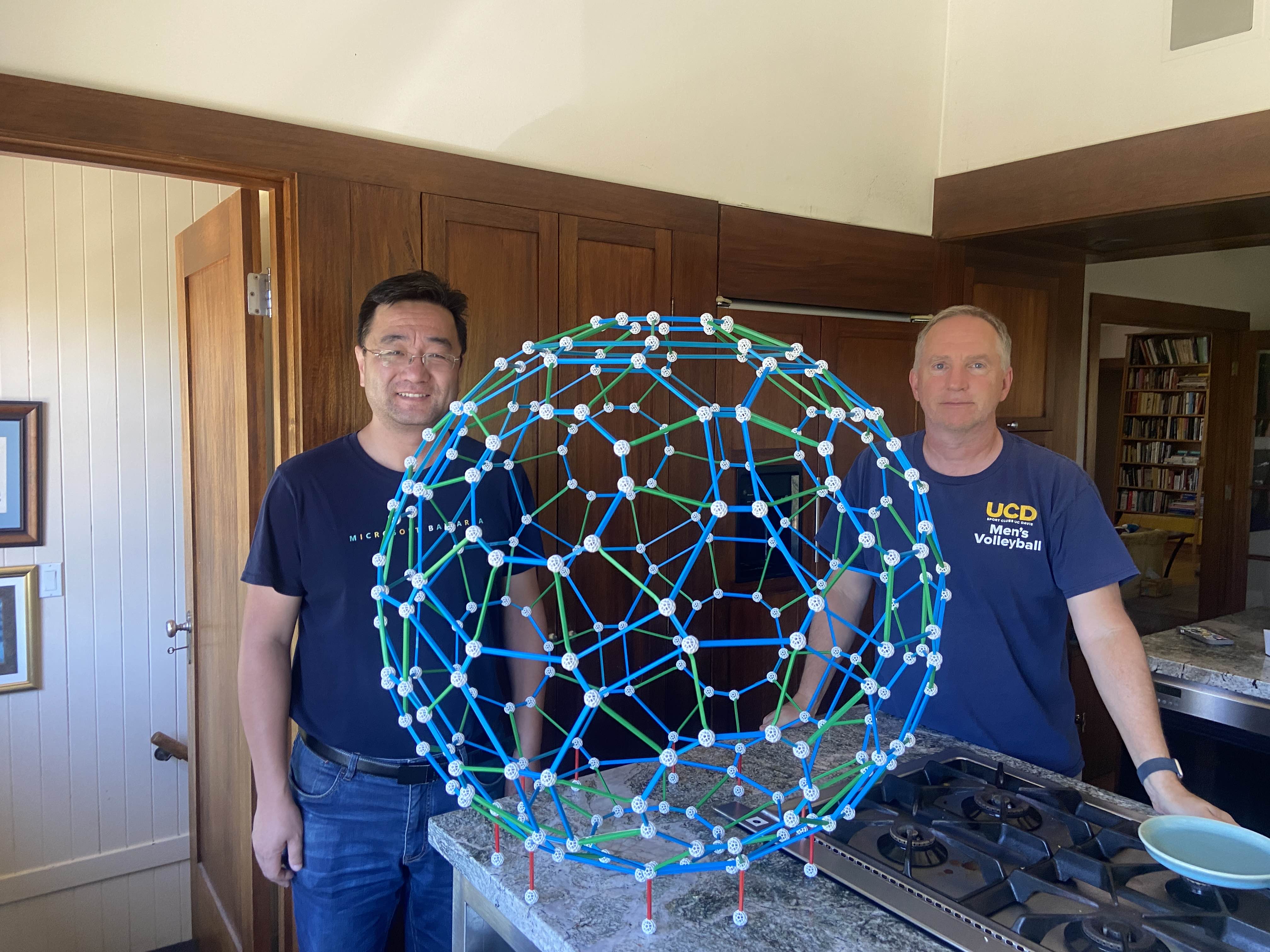
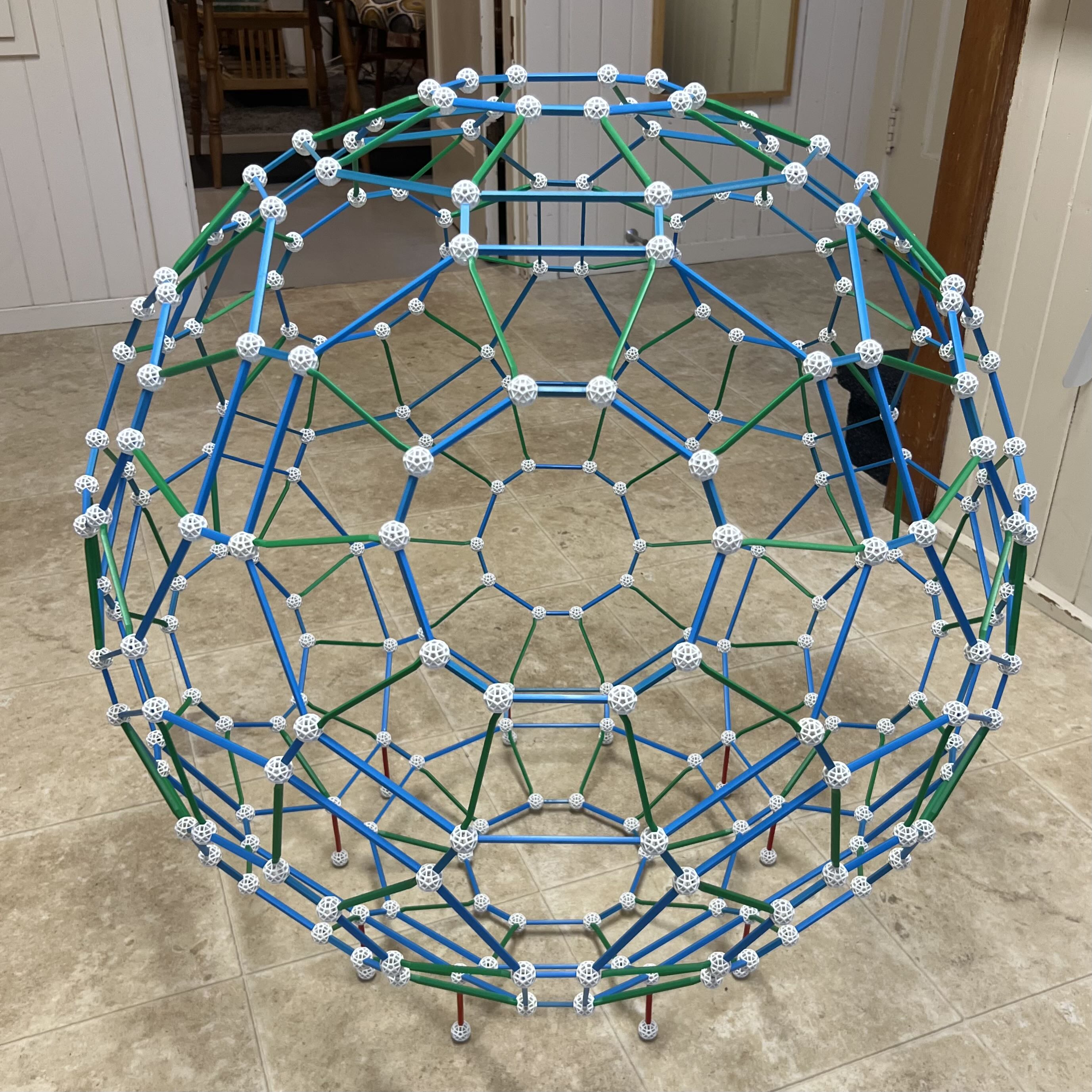
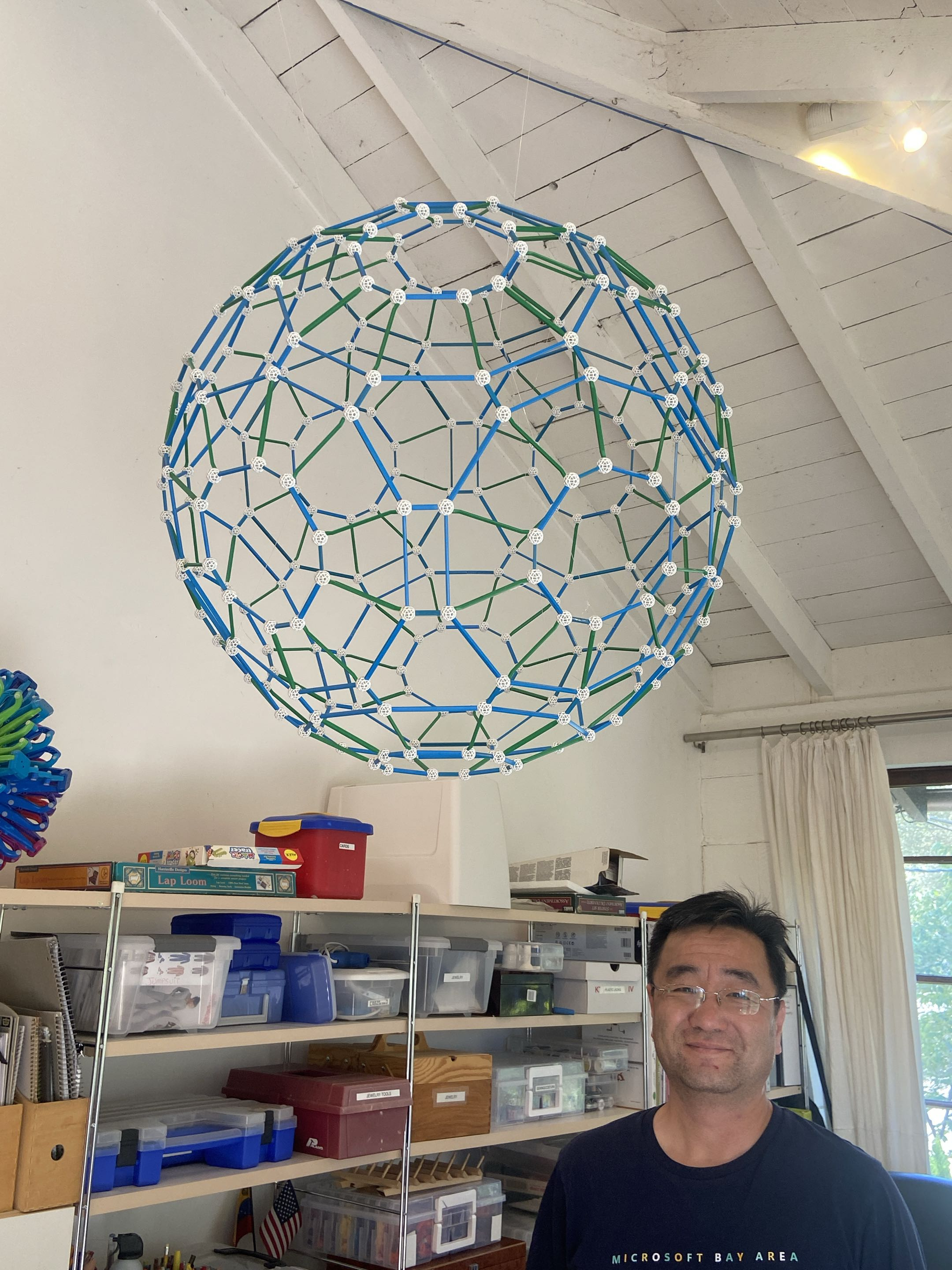
Scott Vorthmann and I built the 240-ball model, variant A, shown in the
interactive gallery above. Its spherical shell has 240 balls and 420 struts.
The red struts support the model and are not part of the sphere.
The completed 240-ball model, built by Nan Ma and Scott Vorthmann.A closer view of the shell.The shell suspended from the ceiling.